Trout Fishing the Hooch
Through Helen, North Georgia's Alpine tourist town, the Chattahoochee gets heavy doses of hatchery trout on a regular basis. Access is good through most of Helen, with anglers fishing right through downtown. The river has already reached a decent size in this area and leaves plenty of open area for casting. The river bottom drops just enough to create good holding areas for trout. Just remember that in the summer, fishing in Helen has the added sport of dodging the recreational floaters in hot pink tubes.
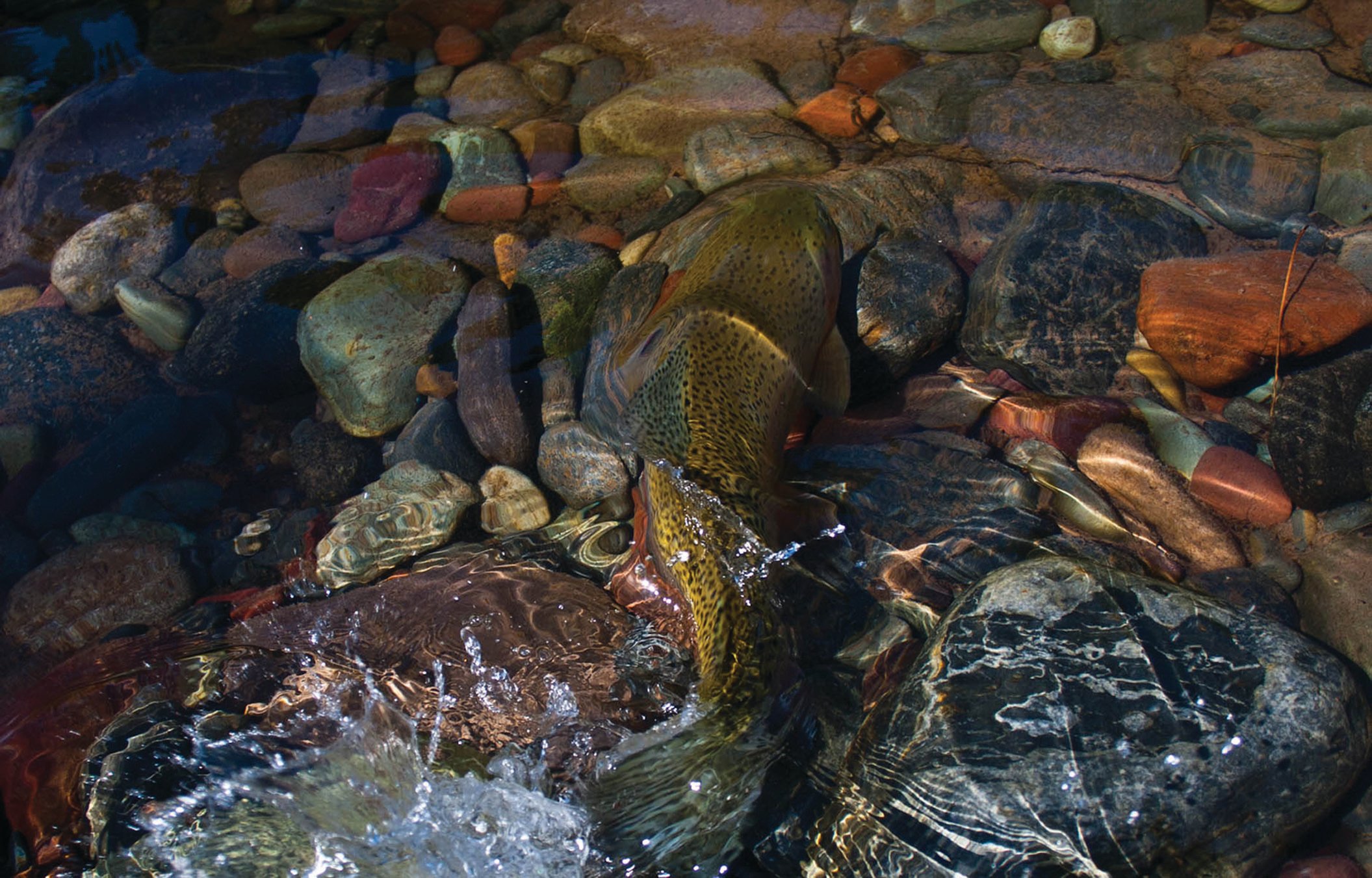
Jumbo trout, some reaching double-digit weights, lurk in private waters at the south end of Helen, through a stretch known as Nacoochee Bend. For a fee through Unicoi Outfitters, this area can be fly-fished.
A couple of miles upstream from Helen, the Chattahoochee's entire headwaters region tumbles through the Chattahoochee Wildlife Management Area. This section is wild and more rugged than the Helen section, but through the lower end of the management area, there is good access and heavily stocked trout.
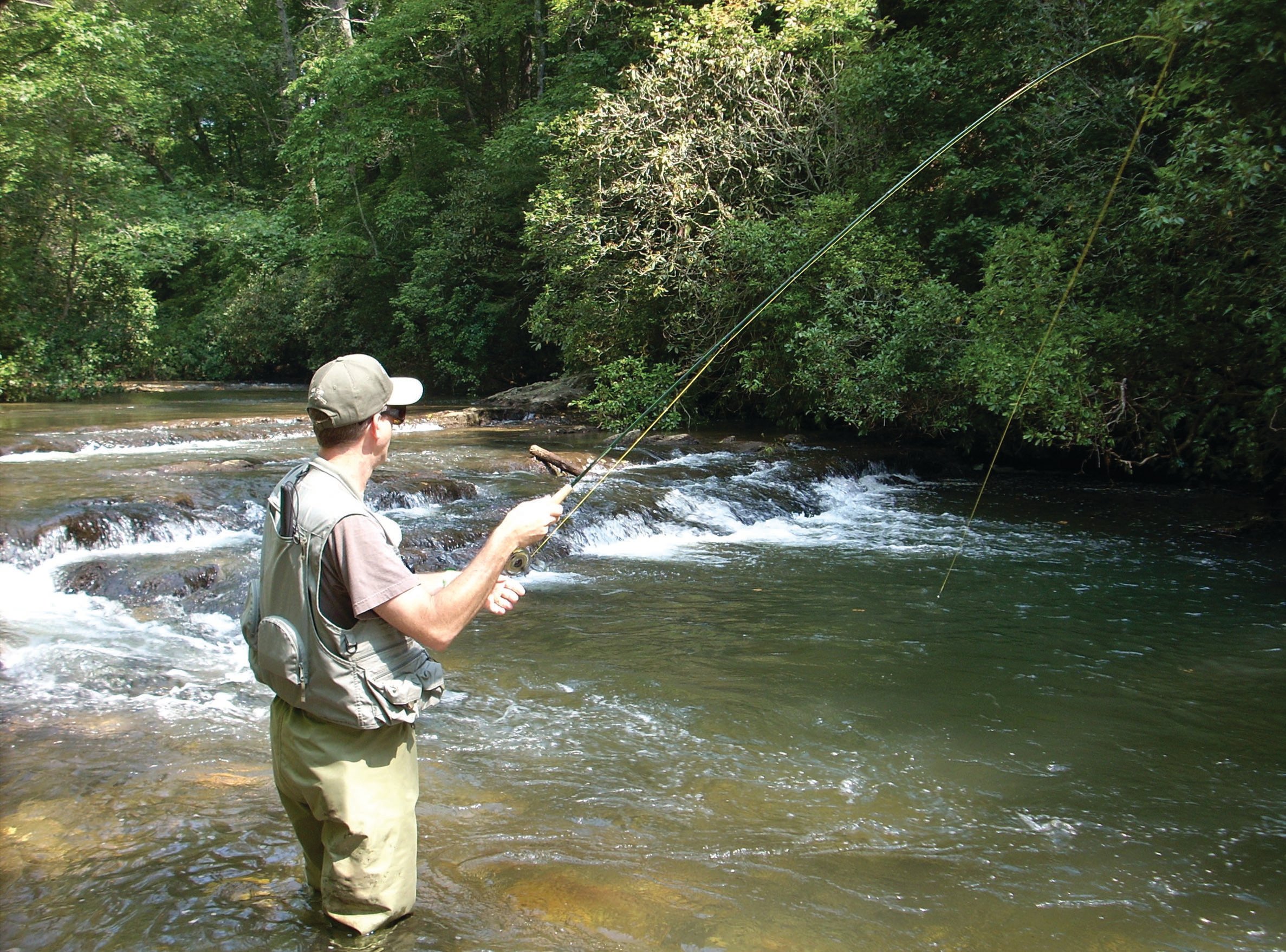
Starting at Buford Dam on Lake Sidney Lanier, the upper river is 28 miles of year-round trout fishing with a healthy population of natural spawning brown trout and stocked rainbow trout. The lower river is a 5-mile section of Delayed Harvest fishing that starts on November 1st and runs through May 14th. This section is stocked with both rainbow and brown trout.
The Chattahoochee is an excellent habitat for Brook, Rainbow, and Brown Trout. Trout Unlimited has rated the Chattahoochee River in the top 100 Trout Streams in the United States.
What makes the Hooch great trout habitat?
Cold water
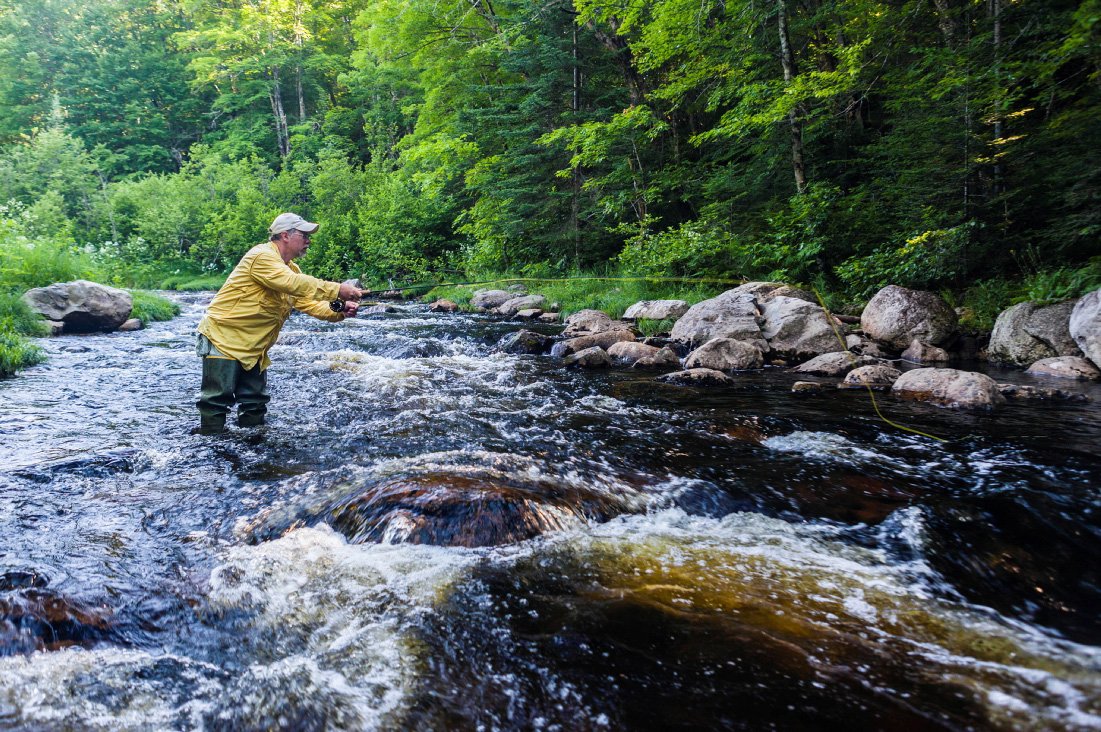
Trout require fast-flowing, cool streams that contain a lot of oxygen. Riffles are shallow places in the stream where water moves over large rocks and creates air bubbles of oxygen for trout and other stream wildlife to breathe. Healthy streams have trees and shrubs growing on the banks that provide shade and keep the water cool. Deep pools provide a cool retreat during summer months.
Clear water
Stream sedimentation is one of the greatest threats to trout habitat. When plants growing along a stream bank are removed, erosion occurs as water washes soil into the stream. Female trout lay their eggs in gravel-bottom streams. Excess soil in streams can cover the eggs, keeping them from oxygen and from hatching.
Unpolluted water
The removal of plants from the banks of creeks and rivers may allow pollutants to wash into the streams. Trout cannot survive in polluted waters. Their food sources such as stoneflies, mayflies, and hellgrammites are considered indicators of stream health. These insects are highly sensitive to pollution; their presence indicates an unpolluted stream with excellent water quality.
Trout species in the Chattahoochee
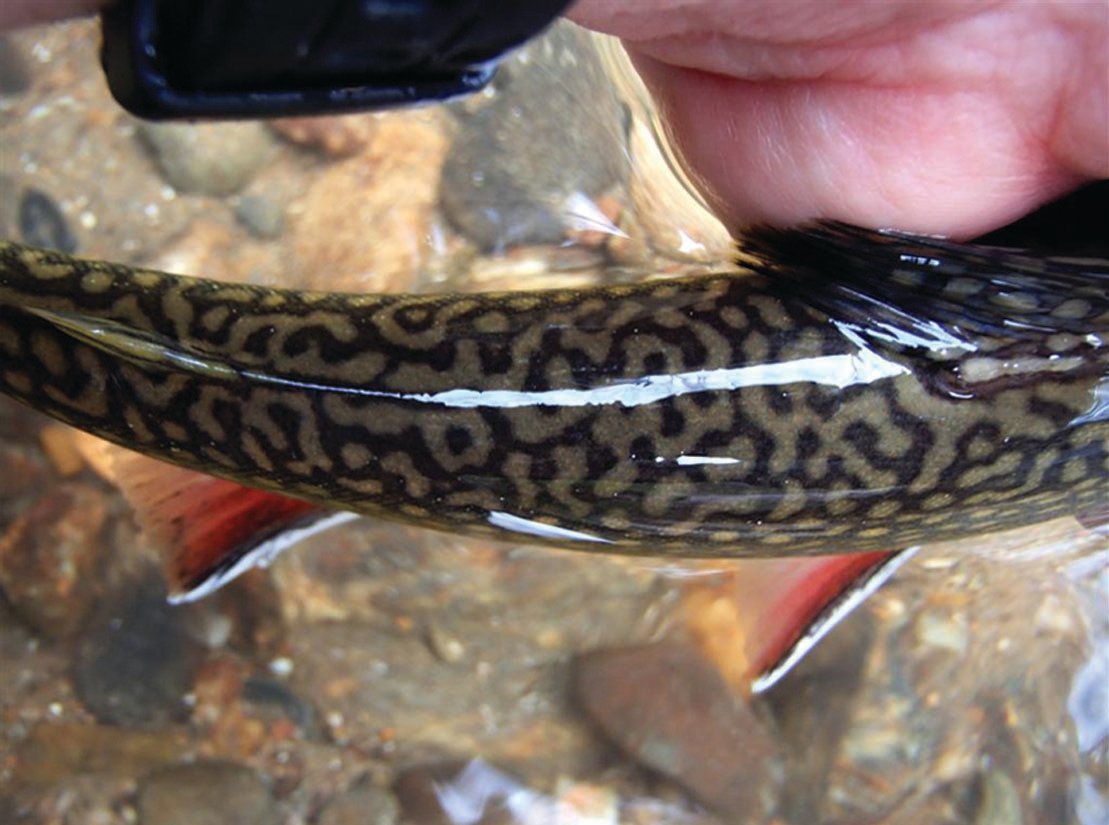
Brook Trout (Salvelinus fontinalis) — Native. Light, worm-like markings on a dark upper body and vivid white leading edges on the lower fins. Rarely exceeds 8 inches in length.
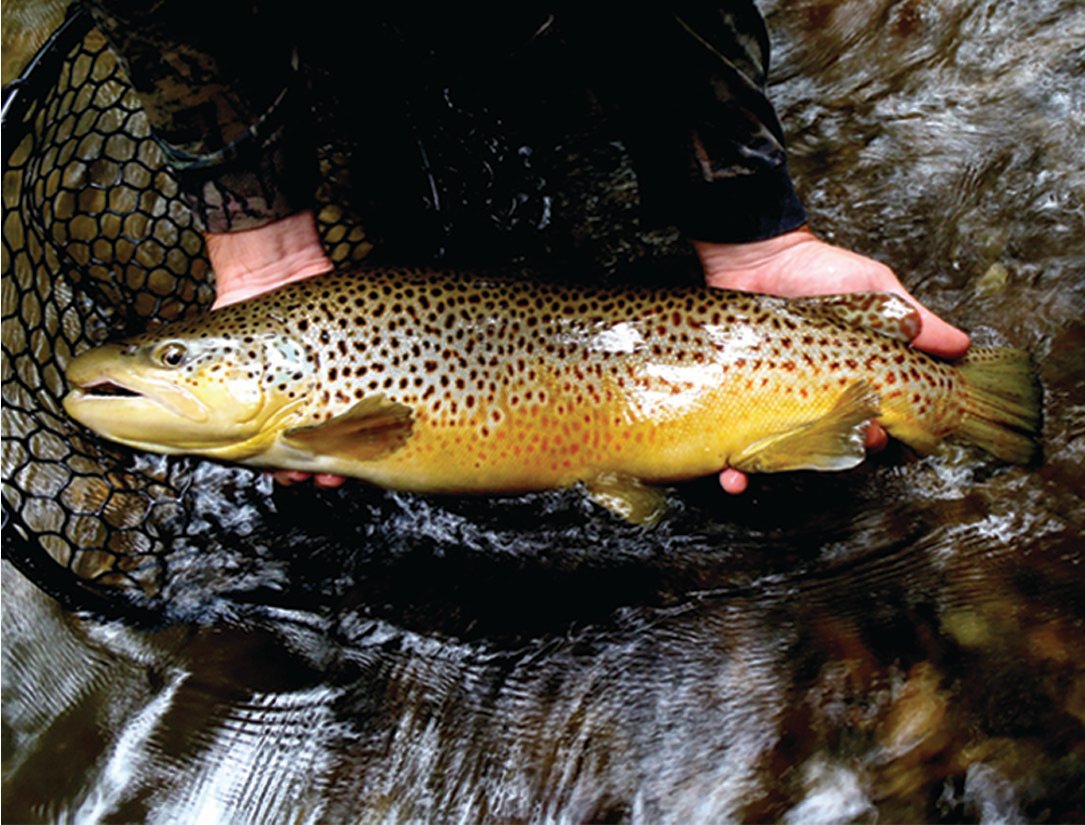
Brown Trout (Salmo trutta) — Introduced. Olive green to brown on top and golden-yellow on the sides. Average of 10 to 14 inches in length.
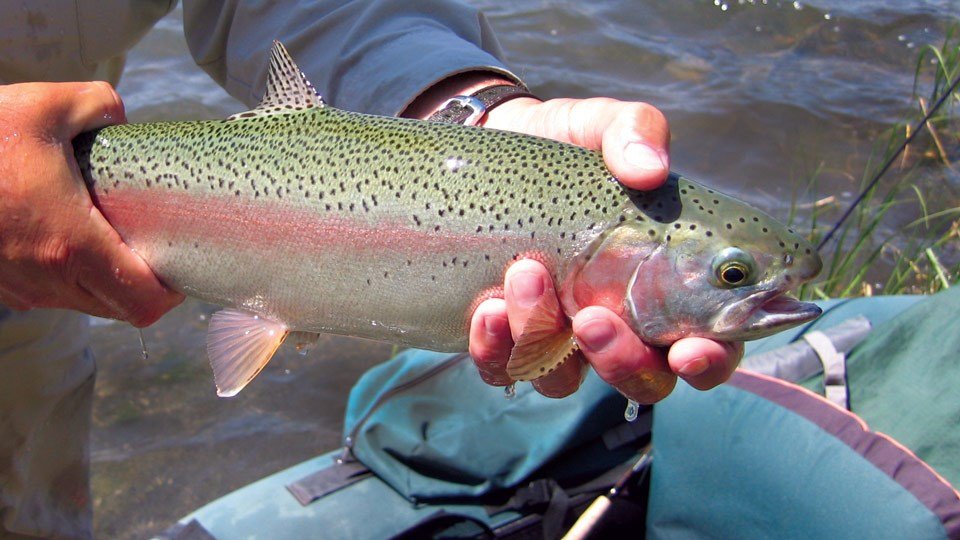
Rainbow Trout (Oncorhynchus mykiss) — Introduced. Prominent pink-red horizontal stripe on each side of a silvery body. Average length of 8 to 12 inches.